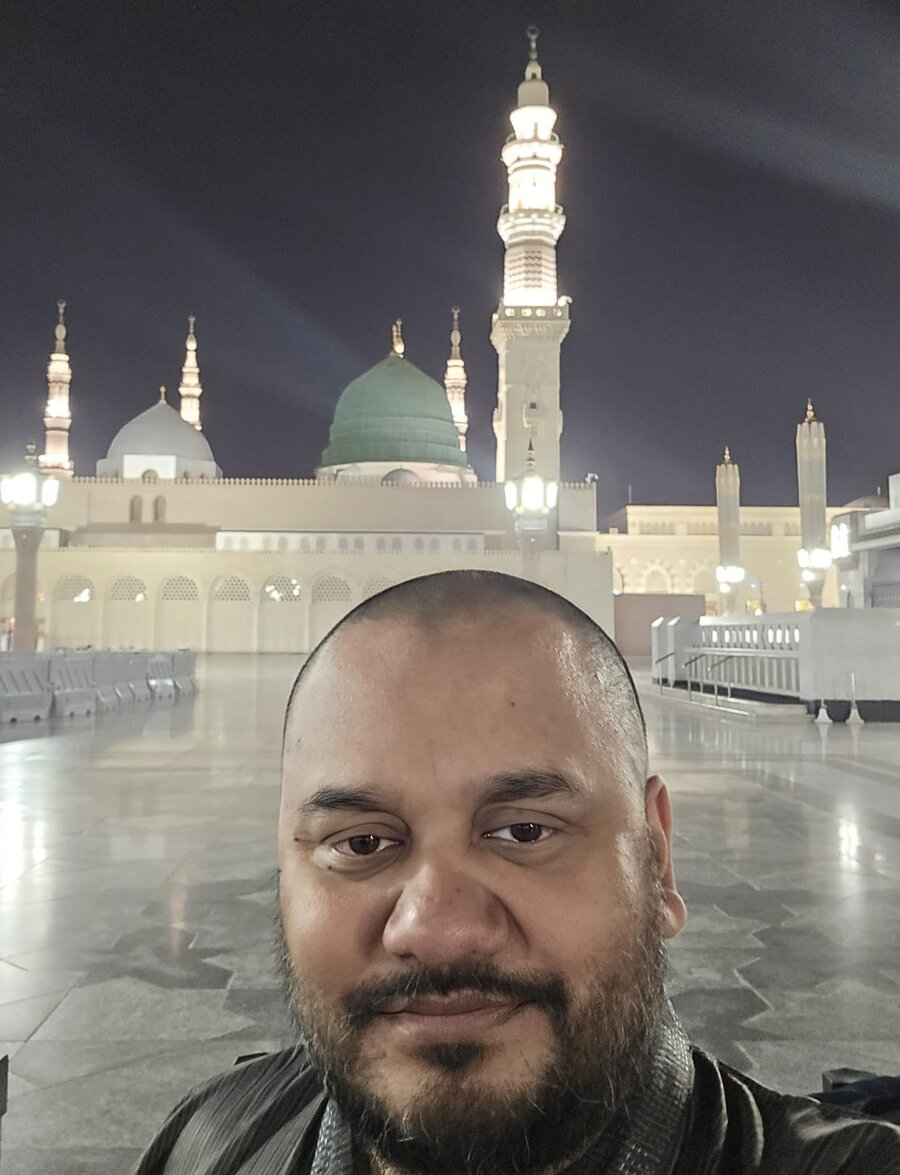
My name's Shofiqul Islam — Si, to most people. I'm not an app developer by trade. I work in cybersecurity and risk assurance, and I've been doing that for over 25 years. My Namaz started as a personal itch, not a business plan.
Like a lot of Muslims, I had a prayer app on my phone for years. Then another one, when the first started showing me ads between prayers. Then another, when that one wanted an account before it would tell me the time of Maghrib. Every app I tried had the same problem: the one thing I actually needed — how long until the next salah — was buried under features I never asked for. Daily verse notifications. Charity prompts. A community feed. A countdown timer, which should be step one for any prayer app, was often missing entirely, or hidden three taps deep in a "widget" I had to configure myself.
None of that is what I open a prayer app for. I open it to see two things: what time is it now, and how long have I got.
So I built my own
What started as a weekend HTML page for my own phone slowly became something more deliberate. I stripped it back to exactly four things: a live countdown to the next prayer, accurate times calculated for wherever you actually are, a Qibla compass, and a proper monthly timetable. No feed, no verse-of-the-day, no "premium" tier. Just the parts I wanted, done properly.
I built it for myself first, then handed it to my family to try. Then a few friends asked for it. Then their families asked. What was meant to stay a personal tool on my phone turned into something I couldn't fairly keep to myself — so I did it properly: a real iOS app, a real Android app, built with the same care I'd bring to anything at work, tested through TestFlight and closed testing, and submitted to both app stores.
I didn't set out to build "an app." I set out to fix a countdown timer. Everything since has been in service of that one basic idea.
Privacy isn't a feature here — it's the starting position
This part isn't marketing. It's how I actually think about software, because it's how I've spent my career thinking about it.
CISSP · 25+ years in cybersecurity & risk assurance
I assess and audit information risk for a living. When I sat down to design My Namaz, I approached my own data handling the same way I'd approach anyone else's: assume every byte you collect is a liability, not an asset — so don't collect it.
That's why My Namaz calculates everything on your device. Your location is used to work out prayer times and Qibla direction, and it never leaves your phone. There are no accounts, no analytics, no advertising identifiers, and nothing sold or shared with anyone. It's not a promise I'm asking you to trust blindly — it's written out in full on the privacy policy, in plain language, exactly as I'd want it explained to me.
A small sadaqah e jariyah
I built My Namaz to be free, and I intend to keep it that way. My hope for it is simple: that it acts as a sadaqah e jariyah — an ongoing charity — for as long as it's useful to someone. Every time someone prays a little more on time because a clean countdown reminded them, that's the whole point of the app doing its job. I don't need it to be more than that.
What I didn't expect was the response. Since sharing it beyond my own family, I've been genuinely humbled by how many people in the Muslim community have tried it, sent feedback, and asked friends to install it too. That reaction is the reason an HTML page for my own phone turned into two proper apps in app store review right now. I'm grateful for it, and I'll keep building on that trust rather than spending it.